
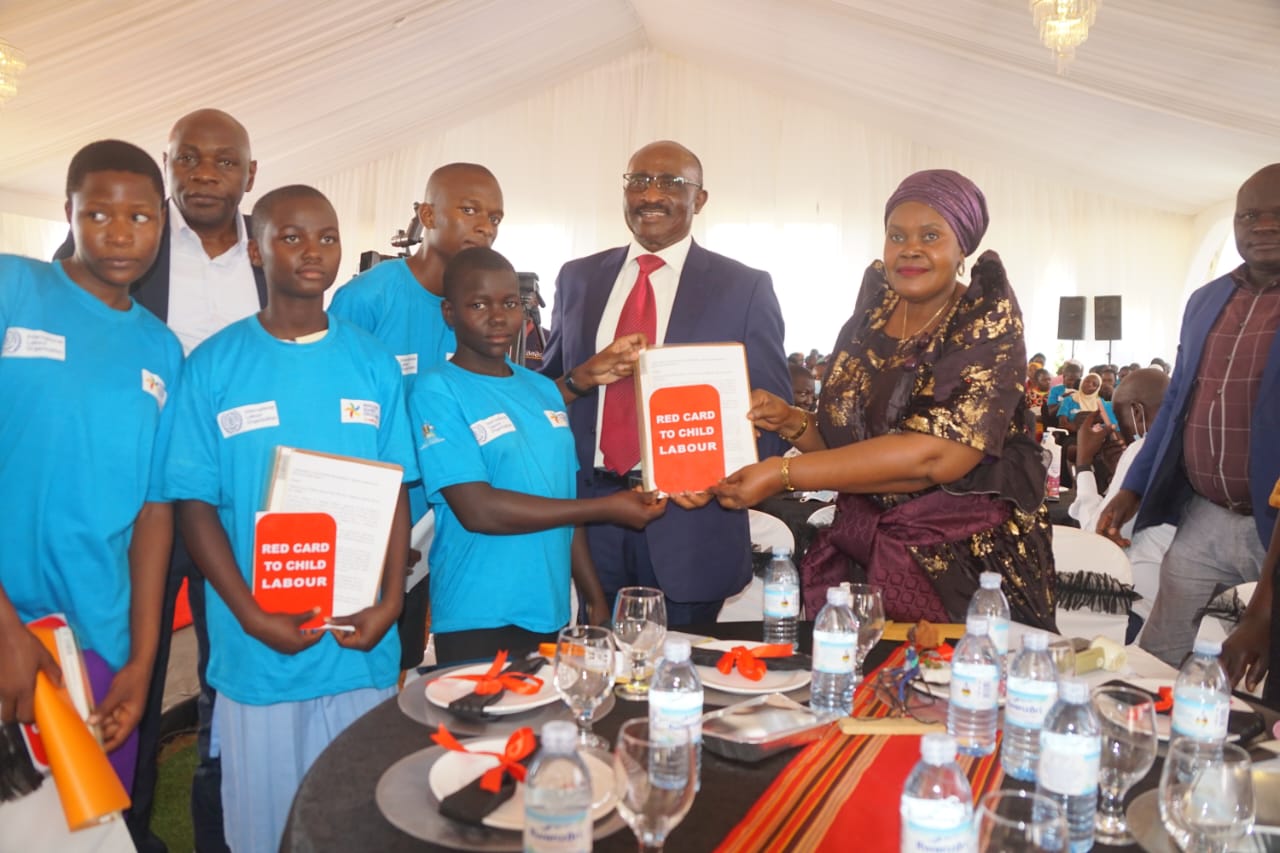
MAYUGE — Uganda joined the rest of the world in commemorating the International Day Against Child Labour, with this year's national celebrations held in Mayuge District under the theme: "Accelerating Action to End Child Labour: Dignity and Full Potential of Every Child."
The commemoration comes at a time when child labour remains a pressing challenge across the country, particularly in districts such as Mayuge where economic pressures continue to force many children into work instead of school.
Across the district, the reality of child labour is visible in trading centres and schools where some children sell pancakes, fish and roasted maize to supplement household incomes.
In some cases, the young vendors are selling to fellow pupils who should be sitting alongside them in class.
One such child is Sarah Namukuve, a Primary Six pupil at Peterstone Primary School in Kigandalo Sub-county. She said she began selling pancakes while in Primary Four because her family's financial situation made it difficult to afford school requirements.
Sarah explained that her mother encouraged her to sell items at school so she could raise money for scholastic materials, adding that many children today have become increasingly focused on earning money.
National statistics reflect the scale of the problem.
According to the Uganda Bureau of Statistics (UBOS) National Labour Force Survey 2019–2021, the number of children aged between five and 17 engaged in child labour increased from an estimated two million in 2019 to about 6.2 million in 2021.
This means nearly 40 per cent of children within that age group were involved in some form of labour.
Mayuge District Senior Labour Officer Patrick Osinya said the district has consistently recorded high levels of child labour, placing it among the worst-affected districts in the country.
He attributed the trend partly to the rapid expansion of sugarcane farming, which he estimated now occupies about 60 per cent of the district's land.
According to Osinya, many residents have leased out their land to wealthier investors who often seek cheap labour for plantation work, with children frequently becoming the preferred workforce.
He also pointed to sand mining activities, where children have increasingly become secondary income earners for their families.
"The family structure has greatly deteriorated. Some children are now heading households. Community members are no longer willing to intervene, while ignorance of child labour laws and parental negligence continue to fuel the problem," Osinya said.
State Minister for Gender, Labour and Social Development in charge of Employment and Industrial Relations, Simon Mulongo, said Mayuge was deliberately selected to host the national event because of its vulnerability to child labour.
He cited industrialisation, fishing activities and the rapid growth of trading centres as some of the key drivers.
"This year's theme reflects government's focus on accelerated mechanisms to end child labour while restoring the dignity of affected children," Mulongo said.
He warned parents against shifting their responsibilities onto children and reaffirmed government's commitment to eliminating child labour.
The Guest of Honour, Third Deputy Prime Minister Lukia Isanga Nakadama, said child labour continues to expose children to numerous risks, including psychological trauma, abuse, health complications, early marriages, teenage pregnancies and sexual violence.
She said testimonies from affected children demonstrated the urgent need for intervention, noting that many young people are being denied their right to education.
"Parents' participation normalises children's frustration," Nakadama said.
She stressed that every child deserves the opportunity to learn, grow and realise their dreams rather than being forced into labour because of parental negligence.
Nakadama also criticised parents who depend on their children to supplement household incomes and urged communities to protect children's rights.
The Deputy Prime Minister further expressed concern that residents of Mayuge have not fully utilised opportunities provided through vocational training programmes in the district.
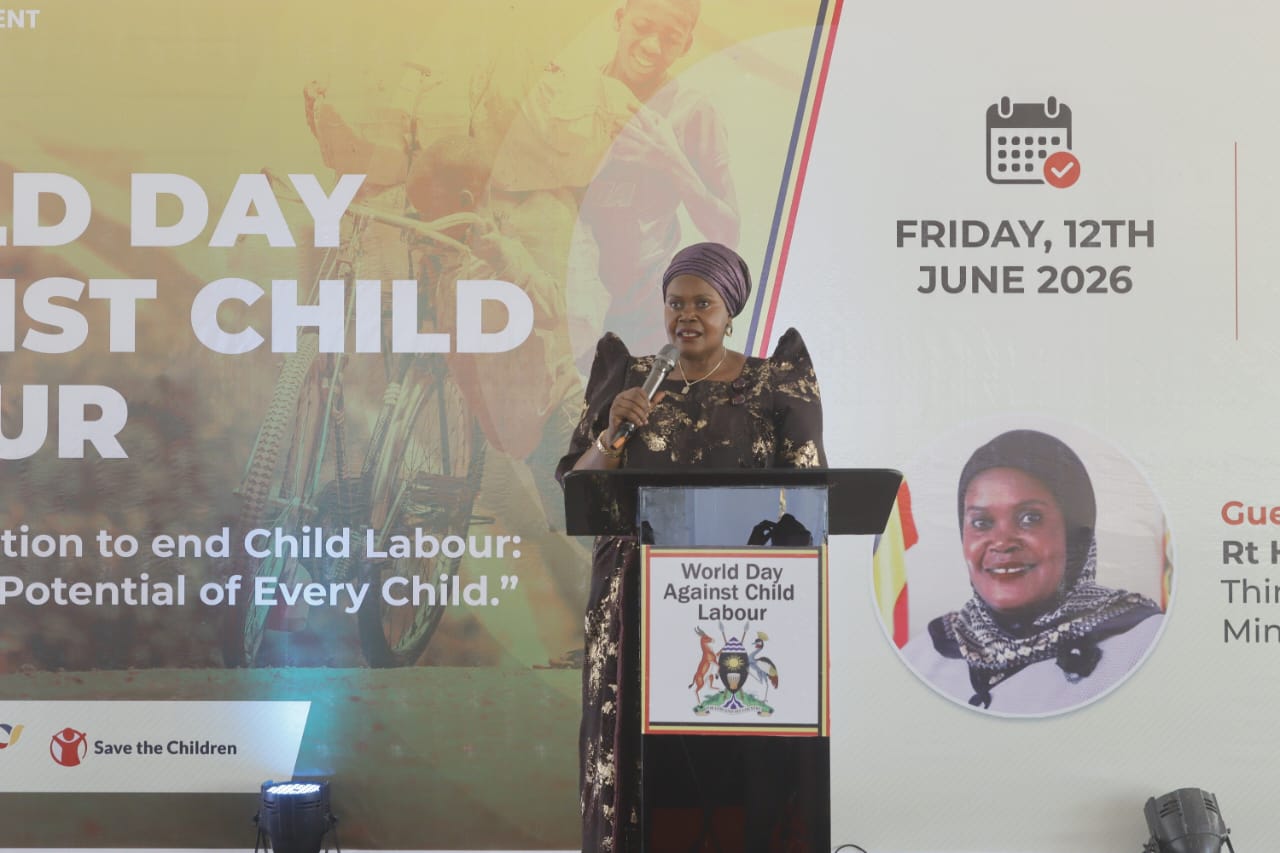
She noted that the President directed the establishment of the Nkoko Memorial Institute following requests from local leaders, but many local families have failed to take advantage of the institution despite its provision of free skills training.
According to Nakadama, some parents continue to keep their children away from such opportunities under the pretext of poverty, undermining efforts aimed at empowering young people and improving livelihoods.
As Uganda joined the global campaign against child labour, leaders at the commemoration called for stronger enforcement of labour laws, increased community vigilance and greater parental responsibility to ensure that every child is protected and given the chance to achieve their full potential.
